Certified is a sustainability consultancy measuring impact across the built environment.
Certified is a sustainability consultancy measuring impact across the built environment.
ROLE
Visual Designer
TEAM
2 Directors & Sustainability Consultants
TIMEFRAME
6 months (Contract)
ROLE
Visual Designer
TEAM
2 Directors & Sustainability Consultants
TIMEFRAME
6 months (Contract)
ROLE
Visual Designer
TEAM
2 Directors & Sustainability Consultants
TIMEFRAME
6 months (Contract)
CONTEXT
Over six months, I worked closely with the directors and sustainability consultants, reporting directly to the directors. Much of the work involved communicating large amounts of technical data under tight deadlines. I refined the visual identity, created the brand guidelines, developed templates used across the consultancy, and designed dashboards and communication tools that helped the team present complex information more clearly and consistently.
CONTEXT
Over six months, I worked closely with the directors and sustainability consultants, reporting directly to the directors. Much of the work involved communicating large amounts of technical data under tight deadlines. I refined the visual identity, created the brand guidelines, developed templates used across the consultancy, and designed dashboards and communication tools that helped the team present complex information more clearly and consistently.
DIARY

DIARY
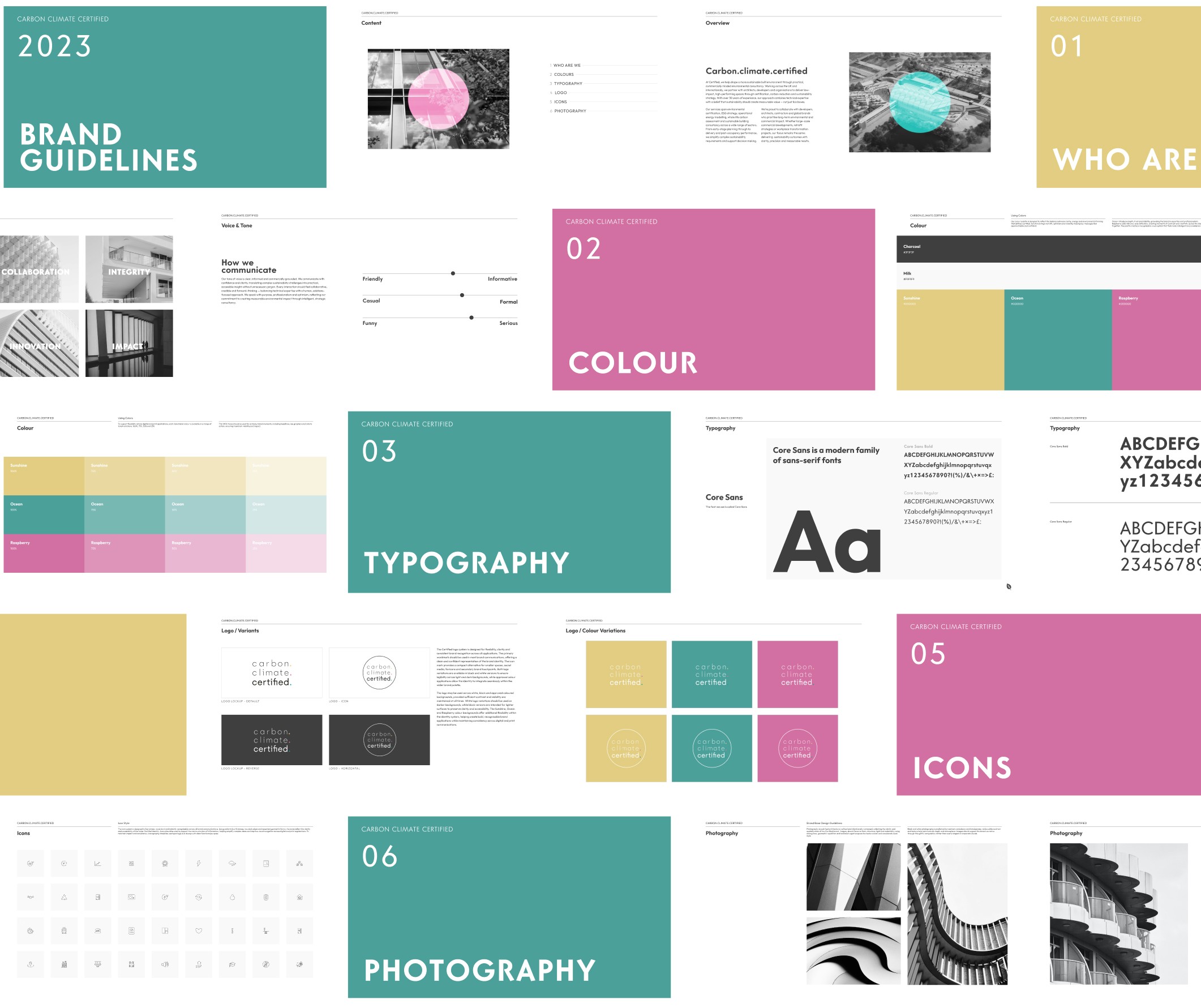
Developing Brand Guidelines
Problem: When I joined Certified there was an existing brand, but it lacked consistency and clear guidelines. Some elements were already established, while others had plenty of room for improvement.
Solution: Refined the existing brand system & created clear guidelines.
Key changes included:
Reduced 18 logo variations to 4 core logos
Expanded the colour palette with 25%, 50% and 75% tints instead of relying on only three bold colours
Replaced inconsistent stock icons with a bespoke icon system designed specifically for the brand
Standardised typography with clear text sizes, styles and usage rules
Defined a photography style focused on abstract architectural details and interesting building features
Swapped the website and asset background from pure black to an off-white, making the brand feel lighter and more approachable
Result: A more consistent, easy-to-use brand that could be applied confidently across all assets.
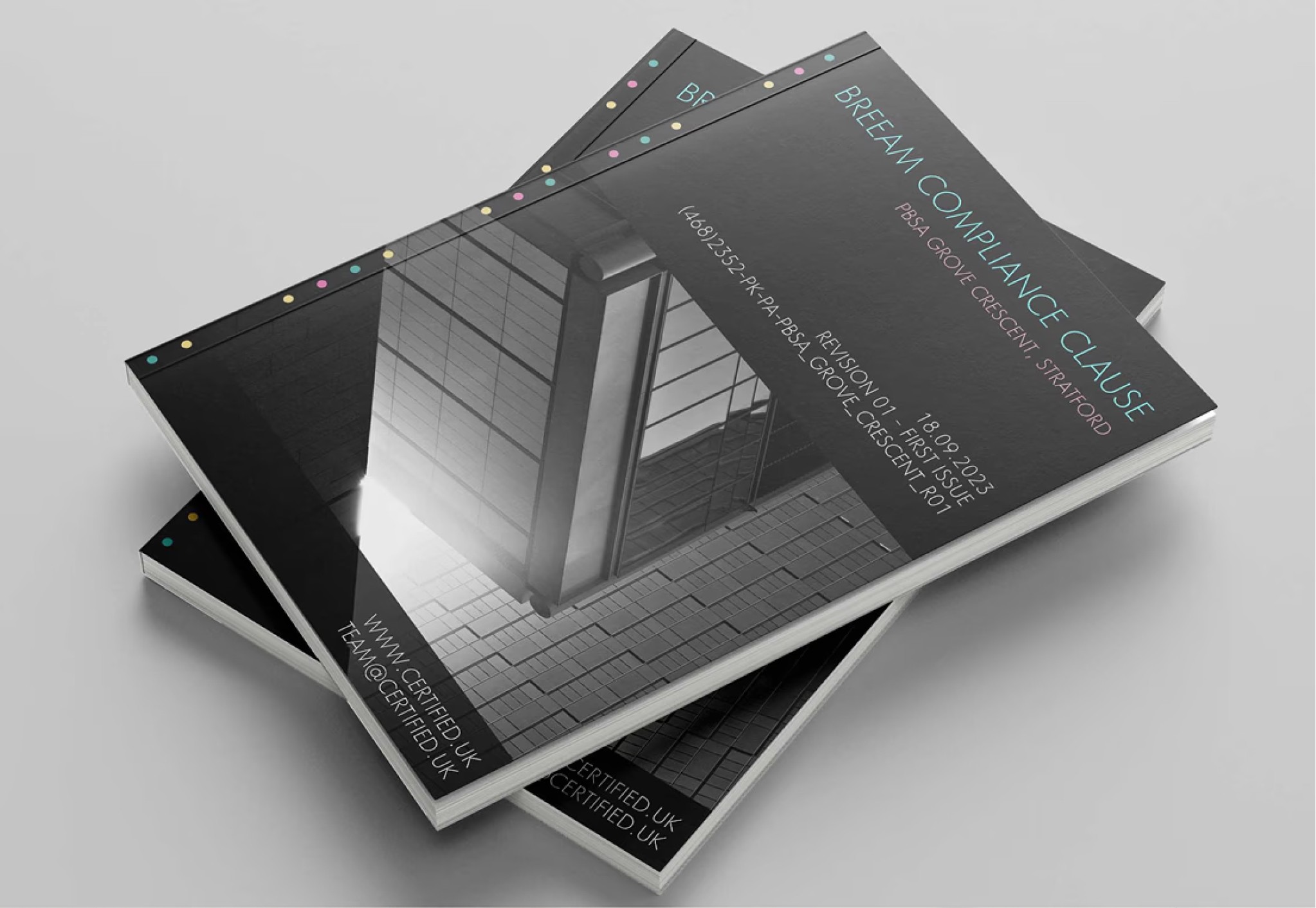
Designing Branded Technical Documents
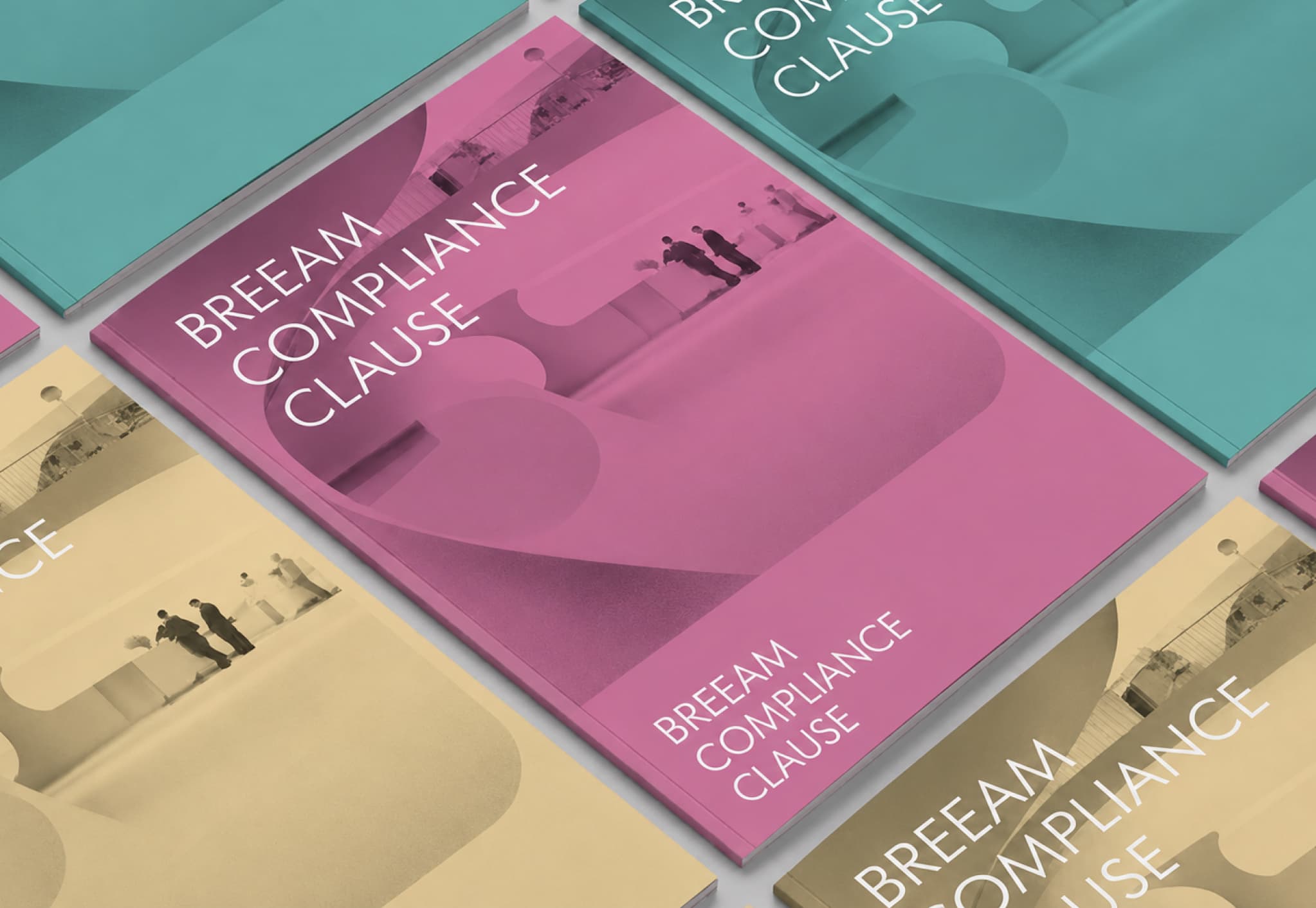
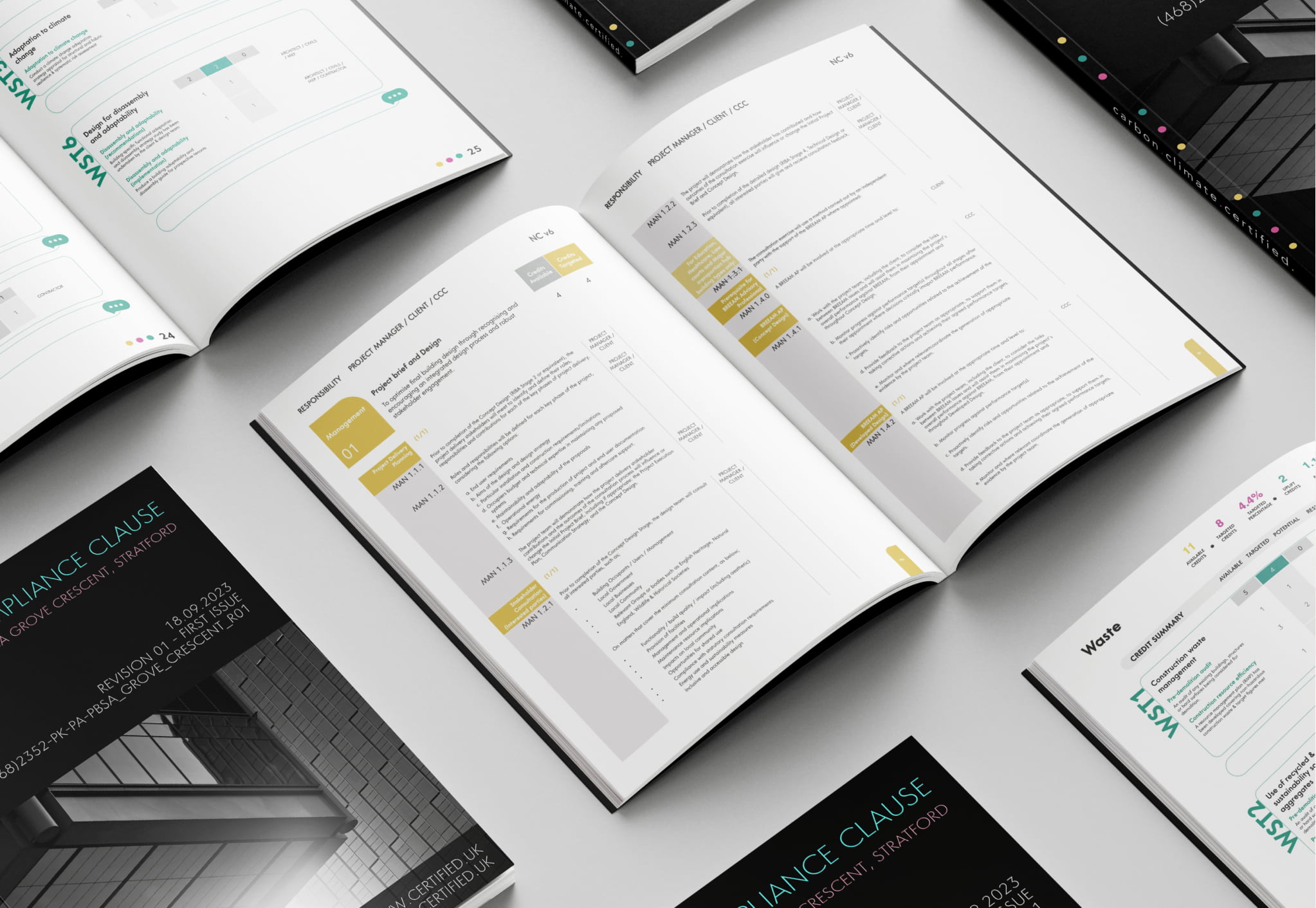
Problem: No consistent document system, leading to off-brand layouts and slow production
Solution: Built standardised InDesign templates so every document followed the brand guidelines
Result: Made it easy for non-designers to create consistent, on-brand documents much faster
Developing Branded Visuals
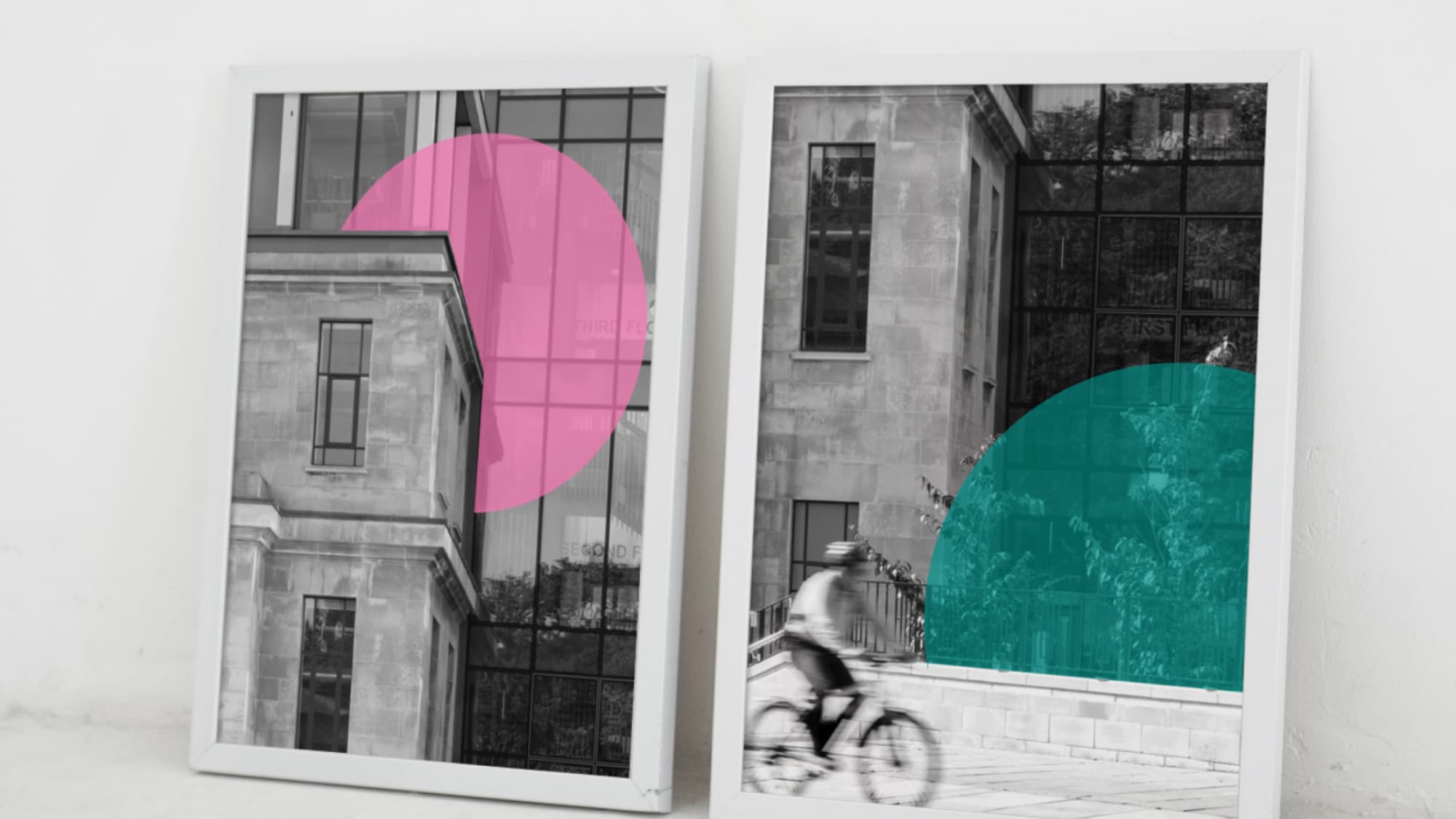
Problem: Project imagery relied on third-party photography, giving the brand little visual ownership
Solution: Created and applied recognisable branded visuals, so every project felt distinctly Certified
Result: Built a stronger visual identity that celebrated our impact on the built environment

Simplifying Information Communication
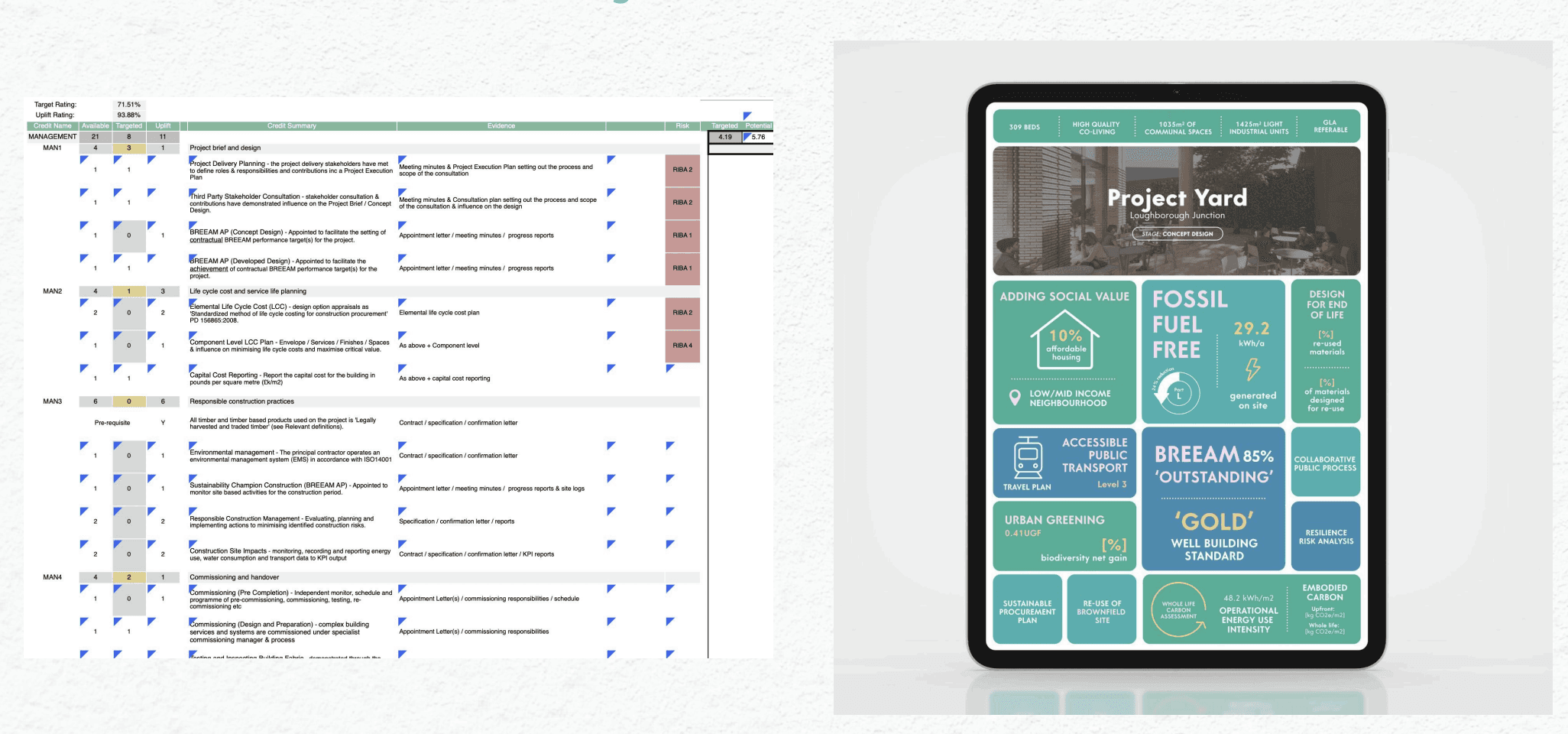
Problem: Key sustainability data was buried in large spreadsheets, making it difficult to communicate and slowing decision-making during bid meetings.
Solution: Worked closely with consultants to identify the metrics that mattered most, then designed interactive dashboards that brought the most important information to the forefront in a clear, iPad-friendly format.
Result: Made complex data easier to understand, sped up decision-making, and gave teams a more engaging way to present information during bids.
Developing Brand Guidelines
Problem: When I joined Certified there was an existing brand, but it lacked consistency and clear guidelines. Some elements were already established, while others had plenty of room for improvement.
Solution: Refined the existing brand system & created clear guidelines.
Key changes included:
Reduced 18 logo variations to 4 core logos
Expanded the colour palette with 25%, 50% and 75% tints instead of relying on only three bold colours
Replaced inconsistent stock icons with a bespoke icon system designed specifically for the brand
Standardised typography with clear text sizes, styles and usage rules
Defined a photography style focused on abstract architectural details and interesting building features
Swapped the website and asset background from pure black to an off-white, making the brand feel lighter and more approachable
Result: A more consistent, easy-to-use brand that could be applied confidently across all assets.
Designing Branded Technical Documents
Problem: No consistent document system, leading to off-brand layouts and slow production
Solution: Built standardised InDesign templates so every document followed the brand guidelines
Result: Made it easy for non-designers to create consistent, on-brand documents much faster
Developing Branded Visuals
Problem: Project imagery relied on third-party photography, giving the brand little visual ownership
Solution: Created and applied recognisable branded visuals, so every project felt distinctly Certified
Result: Built a stronger visual identity that celebrated our impact on the built environment
Simplifying Information Communication
Problem: Key sustainability data was buried in large spreadsheets, making it difficult to communicate and slowing decision-making during bid meetings.
Solution: Worked closely with consultants to identify the metrics that mattered most, then designed interactive dashboards that brought the most important information to the forefront in a clear, iPad-friendly format.
Result: Made complex data easier to understand, sped up decision-making, and gave teams a more engaging way to present information during bids.
Developing Brand Guidelines
Problem: When I joined Certified there was an existing brand, but it lacked consistency and clear guidelines. Some elements were already established, while others had plenty of room for improvement.
Solution: Refined the existing brand system & created clear guidelines.
Key changes included:
Reduced 18 logo variations to 4 core logos
Expanded the colour palette with 25%, 50% and 75% tints instead of relying on only three bold colours
Replaced inconsistent stock icons with a bespoke icon system designed specifically for the brand
Standardised typography with clear text sizes, styles and usage rules
Defined a photography style focused on abstract architectural details and interesting building features
Swapped the website and asset background from pure black to an off-white, making the brand feel lighter and more approachable
Result: A more consistent, easy-to-use brand that could be applied confidently across all assets.
Designing Branded Technical Documents
Problem: No consistent document system, leading to off-brand layouts and slow production
Solution: Built standardised InDesign templates so every document followed the brand guidelines
Result: Made it easy for non-designers to create consistent, on-brand documents much faster
Developing Branded Visuals
Problem: Project imagery relied on third-party photography, giving the brand little visual ownership
Solution: Created and applied recognisable branded visuals, so every project felt distinctly Certified
Result: Built a stronger visual identity that celebrated our impact on the built environment
Simplifying Information Communication
Problem: Key sustainability data was buried in large spreadsheets, making it difficult to communicate and slowing decision-making during bid meetings.
Solution: Worked closely with consultants to identify the metrics that mattered most, then designed interactive dashboards that brought the most important information to the forefront in a clear, iPad-friendly format.
Result: Made complex data easier to understand, sped up decision-making, and gave teams a more engaging way to present information during bids.
THE PROCESS

THE PROCESS
REFLECTIONS
This strengthened my understanding of 'less is more' when presenting technical information & balancing the ratio between technical & visual communication. Working in house designer i learnt the importance of understanding the existing branding and working creatively within the existing frameworks.
In terms of the industry, i found it interesting that while we were at the forefront of architectural innovation, many still rely on outdated reporting and that sometimes spending times innovating in these areas can help have a massive impact on the goals, in this case of making architecture more sustainable.
I became more interested in architecture and what sustainability means in the space, going on to read a Thomas Heatherwick's book 'Humanise' which introduced the idea of designing more beautiful buildings, as these are
likely to last longer than quick sky blocks, which may on paper be more sustainable but if people don't connect with them they will be knocked down in 40 years time. I wonder how much of this sustainability work will last the test of time, or if things like beauty and community acceptance and love of a building, will become included in these reports, and how impactful that could be?
REFLECTIONS
This strengthened my understanding of 'less is more' when presenting technical information & balancing the ratio between technical & visual communication. Working in house designer i learnt the importance of understanding the existing branding and working creatively within the existing frameworks.
In terms of the industry, i found it interesting that while we were at the forefront of architectural innovation, many still rely on outdated reporting and that sometimes spending times innovating in these areas can help have a massive impact on the goals, in this case of making architecture more sustainable.
I became more interested in architecture and what sustainability means in the space, going on to read a Thomas Heatherwick's book 'Humanise' which introduced the idea of designing more beautiful buildings, as these are
likely to last longer than quick sky blocks, which may on paper be more sustainable but if people don't connect with them they will be knocked down in 40 years time. I wonder how much of this sustainability work will last the test of time, or if things like beauty and community acceptance and love of a building, will become included in these reports, and how impactful that could be?
Check Out Other Projects
Other Projects